
A Rainy Afternoon, a Slice of Pie, and an Old Uniform
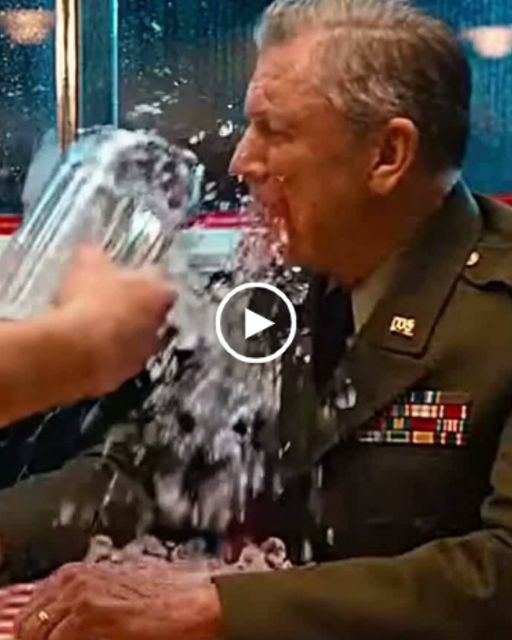
I was seventy-two years old and wearing my old Class A uniform, the one with the ribbons that had been through more than most people knew. I stopped at the little diner off the highway for a piece of pie while the rain drummed on the windows. The place smelled like coffee, bacon, and warm cherries. It was the kind of place where the regulars knew the waitress by name and the cook waved from the grill.
Four college kids came in behind me, loud and full of the kind of swagger you get when you’re young and the night still feels like it belongs to you. They smelled like a frat party and cheap beer. They laughed too loudly at nothing at all, and when they saw my uniform, their voices turned sharp, like they were poking at something they didn’t understand. They snickered at my worn ribbons as if they were stickers from a cereal box.
Even the forks in the diner seemed to pause. A hush settled over the room, the kind that makes a person’s heart beat louder. My hands didn’t shake from fear. It was something older than that—something hot and bright that lived deep in the bones and knew how quickly a simple moment can turn.
The Pitcher, the Shock, and the Silence
“Maybe the old man needs to cool off!” one of them jeered. He was a blond kid with freckles and a grin a little too wide. Later, I’d learn his name was Todd.
Before I could react, a pitcher tipped. Ice and water hit me full in the face. It was so cold it stung like a slap. The cherry syrup I’d been about to pour on my pie mixed with the taste of metal in my mouth. My collar was soaked, my eyes blinking away tears from the shock.
The laughter died faster than it had started. Every head turned. The waitress—Mary, according to her name tag—froze by the pie case. The cook’s spatula hit the grill with a sharp slap. I stared at Todd, who leaned in close, close enough for me to count the freckles on his nose.
“What’s the matter, old man?” he said, his breath thick with beer. “Cat got your tongue?”
He thought I was alone. But I wasn’t.
When the Tablecloth Began to Growl
My right hand slid under the long tablecloth. I didn’t reach for a weapon. I reached for a simple carabiner clipped to the booth’s leg. There was a quiet click, the kind of sound only a person who knows what to listen for can hear.
The growl started low—so low the salt shaker buzzed on the table. It was a sound that comes from the ground and from the bones, not from the throat. Todd’s eyes flicked downward, confusion lighting his face.
The tablecloth lifted like a curtain at the start of a play. A big, scarred muzzle slid out—coal-black, steady, lips just parted enough to show the work God intended for those teeth to do. He was all old muscle and new purpose, ninety pounds of calm that could become motion in an instant. His ears were forward. His gaze never left Todd’s hands.
You could have heard the neon sign hum outside. No one moved. No one breathed.
“Easy,” I said, calm as a still lake. I unclipped the carabiner fully and gave a quiet cue. “On me.”
He flowed out from beneath the table, chest low, vest snug against his thick ribcage. He moved to Todd’s belt line and pressed his nose gently to the waistband of the kid’s shirt. He froze, made a small adjustment, and then looked back at me—an unmistakable look I knew like my own heartbeat. He had found something important. Something that didn’t belong.
The Patch Everyone Could Read
Todd’s confidence cracked. He took a step backward, but my dog matched him, slow and silent. The phones in the diner began to come up—half-curious, half-afraid. Someone whispered, “Is that a—” and then stopped.
My dog shifted, and his vest turned just enough for everyone to read the bright yellow patch stitched across his side. Two simple words in bold black letters. Eyes widened. Mouths opened. The whole room seemed to take one collective breath.
It said MEDICAL ALERT.
The tension didn’t disappear—it just changed shape. Suddenly people weren’t waiting for a fight. They were waiting for an answer they didn’t understand.
Todd’s buddies—Brent and Kevin—turned pale. Whatever bravado had brought them in had vanished, leaving behind boys who had waded into water over their heads. A fourth friend, who hadn’t said much, stared at the floor as if hoping it might swallow him whole.
“Medical Alert?” Todd stammered, eyes darting between the vest and my face. “What is this, some kind of joke?”
“Gunner doesn’t tell jokes,” I said evenly. “He tells the truth. Take what he found and set it on the table.”
My voice had the kind of steadiness I’d once used on a radio when the sky was full of noise. It wasn’t loud. It didn’t need to be.
The Truth on the Table
Todd’s hands trembled as he reached under his shirt. His polo hitched. He hesitated long enough to look at his friends, then at the quiet crowd, and finally back at me. He was cornered by something he couldn’t punch or laugh away.
Carefully, he unclipped a small plastic device from his belt. A thin, clear tube led from it to his skin, threading under his clothing. He placed it on the table with a soft click that echoed.
An insulin pump.
Gunner gave a small whine and nudged Todd’s leg with his nose, a sound that meant the danger wasn’t anger or aggression—it was inside the boy’s body. I gave a soft command. “Okay, boy. Break.”
Gunner’s shoulders eased. He sat, tail thumping once on the tile, those steady brown eyes tracking Todd’s color, his breath, his hands. His job wasn’t to scare. It was to save.
“When was the last time you ate?” I asked. My voice wasn’t hard anymore. The command had softened into care.
He managed a shake of the head. Brent cleared his throat. “We were at the bar. He had a few beers. He said he was fine.”
“Beer can make it drop fast,” I said, more to myself than to them. I slid out from the booth, knees protesting, and pointed to my seat. “Sit, son. Now.”
He obeyed without a word. His friends hovered nearby, looking helpless and frightened.
Orange Juice, Sugar, and a Steady Hand
I turned to the waitress. “Mary, could you bring a big glass of orange juice? And the sugar dispenser, please.” My voice was gentle, and she moved like a light had just been switched on.
I sat across from Todd while Gunner rested his heavy head on the boy’s knee. Todd stared at his trembling hands. The bravado was gone. In its place sat a scared young man who realized his own body had betrayed him.
“What’s your name?” I asked quietly.
“Todd,” he said, barely audible.
“I’m Arthur. This is Gunner,” I said with a nod toward the dog. “He’s trained to smell changes in blood sugar before we feel them—on your breath, your sweat. He growled because he knew you were in trouble.”
Mary set the orange juice down like it was a lifeline. I slid it across to Todd. “Drink all of it.”
His hand shook so hard he could barely lift the glass. I reached out and steadied it with my own—his skin damp and cool, mine dry and lined. It was a simple human connection, and it did the work words sometimes can’t.
He drank. The color came back slowly, like the sky at dawn. I tore open a few packets of sugar and stirred them into what was left. “Finish it,” I said. He did.
The room stayed silent. Phones went back into pockets. People’s faces softened. It no longer felt like an audience waiting for a show; it felt like a roomful of neighbors watching over someone in need.
The Story I Still Carry
After a few minutes, Todd’s breathing evened out. His hands steadied. He blinked hard, shame swimming in his eyes. “Why?” he whispered. “Why are you helping me? I was… awful.”
I leaned back. Gunner sighed, content, his head still a warm weight on Todd’s leg. “You remind me of someone,” I said. “A young man in my unit. Private Miller. Skinny kid from Ohio. Type 1 diabetic, too.”
Todd listened, focused now, really seeing me for the first time.
“He didn’t have pumps and sensors, just needles and grit. Heat, stress, missed meals—it was a tough fight for him. But he never complained. One day we were out on patrol. It was blistering hot. He began to lag, that far-away look in his eyes. I told him to sit, take some sugar. He said he was fine. He wasn’t.”
I paused. The memory still had edges. “He collapsed. We were in a bad spot and help took too long. We did everything we could, but his body had nothing left to give. He died in my arms.”
We listened to the rain for a few heartbeats. The diner faded. I wasn’t there anymore; I was back in the red dirt and monsoon smell, holding a boy who should have grown old.
“I promised myself I wouldn’t let that happen again if I could help it,” I said softly. “When I came home, I put my heart into training service dogs. First for veterans, then for kids, then for anyone who needed a partner in their private war. That’s what brought Gunner to me. And what brought us to you.”
A Dream Lost, a Truth Found
Todd’s chin quivered. “I’m sorry,” he said. “About your uniform. Your ribbons.” He swallowed hard. “I was angry.”
“Why?” I asked, not sharp—just trying to understand.
He stared at the water ring on the table. “I wanted to serve,” he said. “I got into the academy. It’s all I ever wanted. Then the physical found the diabetes a couple of months ago. They sent a letter and that was the end of it. Disqualified.” He lifted his eyes to mine, and they were full of grief he’d been carrying by himself. “They called me a liability.”
It hit me like that first splash of ice water. He hadn’t mocked my service. He’d been grieving the chance to have his own. My uniform was a reminder of the life he thought he’d never live.
“So when I saw you,” he said, voice cracking, “sitting so proud in your uniform, I hated it for a second. I was drunk and mad and stupid. It was easier to turn you into a joke than admit I’d never be you.”
Blue and Red Lights, and a Quiet Exit
Flashing colors washed the diner windows. Someone had called the police during the commotion. A young officer stepped through the door, hand resting near his holster. “We got a call about a disturbance?”
Sal, the owner, wiped his hands and walked forward. “It’s settled, officer. Just a misunderstanding. We’re good now.”
The officer looked around. He saw the calm dog, the insulin pump on the table, the empty glass of orange juice. He looked to me. I gave a small nod. “We’re alright, son. Just a medical issue. We handled it.”
The officer seemed to understand he’d walked into the last page of a story. He tipped his cap and left without fuss. The lights faded away. The room breathed again.
An Apology and a Lesson
Todd put his head in his hands. When he finally sat up, he took a deep breath and reached for his wallet. “I’ll pay for the pitcher, your pie, everyone’s meals—whatever it costs,” he said.
“That’s a start,” I said, “but this is about more than money.”
I pulled an old photograph from my wallet. It was worn soft at the edges. A group of muddy, smiling boys stared back at us from another lifetime. I pointed to one of them. “That’s Miller.”
Todd studied the face that never made it home. I cleared my throat. “Service isn’t just a uniform,” I said. “I wore mine today because it’s the anniversary of the day we lost him. It helps me remember. But the cloth isn’t the service. The person inside it is.”
He frowned a little. “I don’t know what to do now,” he admitted.
“You wanted to help. You still can,” I told him. “Soldiers aren’t the only ones who run toward trouble. Think about paramedics, firefighters, police, search and rescue. You already understand what it’s like when your own body turns on you. Imagine what that could mean to someone scared and shaky in the back of an ambulance. You carry knowledge most people have to learn from a textbook. You can turn that into a life that matters.”
For the first time since he walked in, a spark lit in Todd’s eyes—small but steady. Hope has a way of doing that when you hand someone a map they didn’t know they had.
Clear Skies and New Directions
We talked a little longer. He apologized to Mary and to Sal, face flushed with shame but voice steady. He settled the bill for more than his share. His friends echoed their apologies in quiet voices. By the time we stepped outside, the storm had passed, and the air felt washed clean.
“Mr. Arthur,” Todd said, offering his hand. His grip was firm, not the nervous clutch from before. “Thank you. You… didn’t have to do any of that.”
“Yes, I did,” I said, patting Gunner’s broad back. “You don’t leave a soldier behind.”
The Letter That Arrived with the Pie
Weeks rolled by the way they do. On a Tuesday, I slid into my usual booth during a light afternoon rain. Mary set a slice of apple pie in front of me and a plain envelope beside it. “A young man dropped this off,” she said with a smile. “Said to make sure you got it.”
Inside was a short note and a photograph. The picture showed Todd standing in front of an ambulance, wearing an EMT trainee uniform. One arm was around an older gentleman in a wheelchair—a veteran from the VA, judging by the cap. Both of them were grinning like the world had opened a door for them.
I unfolded the note and read:
“Arthur, I start my clinicals next week at the VA. They said my personal experience is a big asset. Turns out, you were right. You just have to find a new battlefield. Thank you for not leaving me behind. Your friend, Todd.”
I tucked the letter into my coat pocket, right next to the worn photo of Private Miller. Outside, the clouds broke, and sunlight fell in bright stripes on the wet street. Gunner rested his head on my lap, and I scratched that familiar spot behind his ear while the world felt, for a moment, perfectly balanced.
What We Carry, and What We Can Choose
We all have scars. Some are easy to see—lines on a face, a limp, a patch on a vest. Others are quiet and deep, the kind a person learns to carry alone because they don’t know how to explain them. Too often we look at each other and see only the cover, the uniform, the haircut, the beer on someone’s breath, or the bluster in their voice. We have no idea what battles the other person is fighting inside their own skin.
That night in the diner, a foolish act could have turned into something ugly. Instead, a well-trained dog changed the story. A glass of orange juice steadied shaky hands. A memory from long ago found its way to a young man who needed it. And the end of one dream turned into the beginning of another.
Real strength isn’t just about standing your ground. It’s about choosing grace when you could choose anger. It’s about seeing the fear behind the noise and offering a hand instead of a fist. It’s helping an enemy become an ally, a stranger become a neighbor, a lost kid become a man with purpose.
I looked down at Gunner, who had saved the day without making a sound louder than a growl and a sigh. In a world quick to jump to conclusions, he had simply told the truth the way a good dog does—clear, steady, and on time. If there was a ribbon for that, I would have pinned it on him right then and there.
As the sun warmed the wet pavement and my coffee steamed, I thought of Miller, of Todd, and of the lesson both had handed me in different ways. You can’t always choose your war. But you can choose your courage. You can choose to reach across the table—even when it’s covered in melted ice and a mess someone else made—and say, gently and firmly, “On me. We’ll get through this.”



