A Line in the Dust
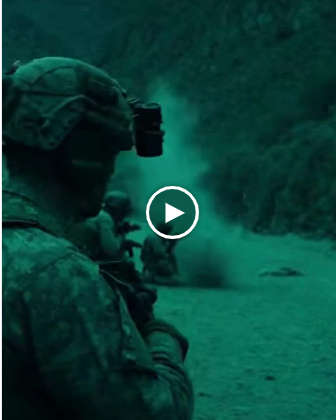
The second burst of fire did not hit a man. It chewed a groove into the dusty ground and kept going, arrow straight, pointing like a chalk mark toward the only opening in a twisting canyon. A young SEAL, hunched low and gasping for breath, stared at the dust drifting over that clean line and whispered what the others were only starting to realize. She was not missing. She was showing them where to go.
That was the moment the team stopped thinking of her as the quiet burden who needed to be managed and started seeing the only person on the battlefield who could see the whole picture at once. Her name was Aara, and she spoke in a language few understood. She did not use her voice. She used the rifle in her hands.
Kalin, the officer in charge, peered through grit and sunlight and tried to make sense of it. The furrow across the sand did not wobble. It did not curve. It drew a straight path toward safety the way a carpenter snaps a chalk line across a plank. Another shot cracked and shaved the ground ten feet farther along the same route. One by one the SEALs rose, staying low, weaving between rocks and scrub. They moved, not because of the orders in their earpieces, but because of that line in the dust, renewed every few seconds by a new impact.
Behind them, and high above, Aara did not blink. Her cheek rested against the stock. Her breath came slow and even. Every few heartbeats she worked the bolt, settled the crosshairs, and sent another round into the dirt in exactly the same direction, never close enough to harm, always clear enough to guide. It looked like a lighthouse beam rewritten as a series of small, hard glints, each one a promise: this way, this way, this way.
Tucked beside her, shielded by black, broken stone, a slim board gleamed with waxy scrawl. On it were her notes in shorthand, written quickly with a grease pencil: wind tug from the left, range steps for different ridges, a reminder to hold an extra inch for the air thinning in the high desert. No one else could read it like she could. No one else needed to.
Taking Fire Meant for Others
Down in the wash, Kalin crashed behind a boulder as the noise rose like a storm. Bullets hissed. Rock spat back tiny splinters. He shouted a question that was half anger and half awe. Who were the enemy trying to kill?
One of the SEALs glanced up the slope and answered in a voice that barely rose above the wind. They were firing at her. Aara’s shots were saving the team, but each one flashed a clue about where she hid. The bright red lines of tracer rounds began to climb the air, groping toward her position like fingers reaching in the dark.
Kalin did what training teaches. He told the sniper element to hold. The order came sharp and automatic. But this time the battle did not fit the manual. No one echoed back the command. Aara had already slid two steps to the left, melting into a new pocket of shade. The rifle’s bolt clicked, the barrel steadied, and another round left the muzzle. The tracer round questing for her hit only the cold face of a rock, spitting sparks and nothing more.
The team reached a bend in the canyon wall where the stone rose like a shield. For a handful of seconds, they were safe, and then the ground itself seemed to shudder with a new sound. It was low and hollow, a deep thump that you feel first in your ribs. Anyone who has ever heard it knows what it means. Someone was dropping a mortar round into a tube.
Seeing the Threat Before It Spoke
Aara heard it, too. She left the ridge in her scope and swept left. Her world narrowed to a square of shimmering heat, broken walls the color of old bone, and the tiniest scrape of a finger clearing a lens. That twitch in the light was enough. She shifted the turret dials with practiced turns. Distance. Wind. The drop the bullet would take over the long span. The picture aligned. She fired before the mortar round could rise. A breath later, a cough of dark smoke belched from the doorway below. The mortar never spoke again.
The price for that mercy was steep. The ridge where Aara lay erupted. Rockets streaked overhead with the high, falling whistle of a kettle left on the boil. Machine guns tore lines across the rock. Chips of stone bit her cheek and painted it red. She did not pull away. She did not close her eyes. She slid the bolt and went to work again, changing her rhythm. Now her shots did not only draw a path. They told a story about where the enemy hid.
Marking the Invisible
One impact snapped dust off a rooftop, and three fighters who thought they were unseen ducked. Another struck the edge of a shadow that wasn’t just shade. A third carved a spurt of dirt a hand’s breadth from a dark cave mouth that had looked like a harmless fold in the rock. Each round was a sentence. And if you could read the grammar, each sentence said the same thing. Here. Here. Here.
Kalin saw it first. He found himself saying the words out loud, almost to keep up with her mind. She was painting the battlefield, not with lasers or lights, but with strikes that any pilot could see from the sky. Miller, eyes wide and quiet, shook his head at the strangeness of it. With a simple bolt-action rifle, one patient shooter was building a full target picture.
The radio crackled with an edge of hurry. A flight inbound, two fast jets only seconds away, asked for coordinates. They needed numbers, angles, an exact grid to drop steel where it had to go. There was no time for a range finder, no laser shimmering in the air. There was only the place where the dust rose each time Aara chose to touch the ground with a bullet.
Kalin gritted his teeth. He had never given an order like this before. Use her impacts, he said. Follow her cues. Where she hits is your map.
The reply came back steady and clipped, the kind of voice that pretends it cannot feel the heat. Danger close, they confirmed. Everyone knew what that meant. The jets would be dropping their loads near friendly forces. There was trust in that call, more than trust in radios and names. There was trust in the person who had created a path with steel in the dirt.
When the Sky Answers
Two F-16s tore into the valley so fast they seemed to arrive before their sound. The air turned into a hard, bright thing. Aara kept firing, calm and constant, guiding them to each nest and hide. Her hands bled in little crescents from rock and recoil. Her breath showed white in the thin cold. None of it slowed her. She was not trying to be brave. She was simply doing what she knew to be needed.
Then the jets spoke. Precision weapons fell in the careful pattern of a practiced hand. The ridge bloomed with fire that rolled and then folded back into itself. Roofs collapsed under the weight of the blast. The ground shivered and then steadied again. The echoes faded, and for the first time in what felt like hours, there was not the sharp snap of bullets or the metal song of fragments skittering over stone.
The quiet that followed was not tense. It was complete. It was the kind of quiet that says the worst has passed and there is breath to spare again.
Kalin’s voice cut through the radio, thin with disbelief, telling the sniper element to stop. Aara was already lowering the rifle. She wiped the thin line on her cheek with the back of her hand and blinked the salt of sweat out of her eyes. Her hands shook, not from fear, but from the sudden emptiness that follows hard labor when you finally set down the weight.
Owning the Choice
Time stretched, and then boots crackled on broken stone behind her. Kalin climbed the last few feet, his steps grinding shale. He stood over her, jaw tight, sorting through words that did not want to be said and others that did. He listed the facts because that is how leaders learn to face down what just happened. She had ignored an order. She had allowed the enemy to find her. She had taken control when she was not meant to. She had pointed out targets to aircraft by nothing but bullet marks.
He stopped. He started over. She had also done something else, and it was the only thing that mattered in the sum of the day. She had kept every man in his team alive.
Aara did not defend herself. She did not need to. She took out a small notebook that looked like it had seen rain and heat and years. She wrote one sentence with tidy strokes and turned the page to him. It said that she spoke when no one else could. He let out a dry laugh that sounded part tired and part proud. He told her that sentence would go in the report. She nodded once and began to break the rifle down, piece by careful piece, the way a careful surgeon closes a wound when the hardest part is finished and the only job left is to respect the work by putting every tool away just right.
The Room with the Glass
Back at the base, the air felt different. People watched her with a new kind of quiet. No one cracked a joke about the sniper who never said a word. There was no need. They had seen what she was capable of when words would have only caused delay.
In the debrief, senior officers watched satellite clips without comment. A thin, ruler-straight line carved in the dust marched across the screen like a manmade river. Then the camera shook with the strikes from above, and then it settled to stillness. The colonel in charge cleared his throat and asked the question the handbook required. Had the sniper followed the plan? Kalin told the truth. No. He had misjudged her, too, and he admitted it. The colonel narrowed his eyes and asked the most important thing. How did she tell them where to look?
Kalin glanced to the back of the room where Aara sat with her hands folded, steady as ever. He said she had used the oldest kind of poetry, the kind that does not rhyme but lands heavy. She wrote her language with gunpowder, with patience, with marks in the earth that anyone could read if they cared to look.
Silence held the room, and then the colonel leaned back and said she had earned more than a nod in a file. A commendation would come. Maybe more than one. A week later, the ribbon did arrive. She accepted it with a simple nod. But in truth, the metal and cloth were not the reward she kept.
The Note That Mattered
On her cot lay a scrap of a ration carton with six words in thick marker from Kalin. He told her that the next mission was hers to steer. No clever phrasing. No speech. Just the trust that comes when someone has earned it the hardest way possible. She slid the note into the back of her notebook and did not look at it again. She did not have to. She knew what it meant.
When Trust Moves First
Three nights later the team crept into a different valley with its own sharp rocks and its own old, dark holes where men wait for men. The wind told a different story that night, but the feeling was the same. Fear and focus walked side by side. This time, nobody asked whether the sniper should hold fire. The radio stayed clear. There were no second guesses. Everyone watched the dark and waited to feel, rather than hear, what would happen first.
Aara fired a single round. It landed exactly where it was meant to land. The team moved as if a wire had tugged them all forward at once. They slid into the shape she had drawn and flowed the way a school of fish turns when the shadow above them shifts. There was no scramble, no missed step. It felt as if they had always known this was how it was supposed to work, but they needed one person to show them.
In war, there are orders you can hear down a hallway and across a field. They serve a purpose. But the ones that change a day from awful to survivable, the ones that carry you home, often do not need sound at all. They can be a hand gesture you learn to recognize at a distance. They can be a look that says wait and then go. Or, every now and then, they can be a bright stitch in the dust, renewed every five seconds by a woman who refuses to run out of courage before she runs out of ammunition.
What the Older Eyes See
If you have a few decades behind you, this story might feel familiar, even if you never set foot in a canyon like that. You have been in rooms or on roads where the usual instructions were not enough. You have watched someone who did not talk much make all the difference because they saw more, waited longer, and acted at the right moment. You know the weight of responsibility, that kind of pressure on the ribs that does not show on your face but sits in your chest like a stone. You also know the relief that follows when the danger passes and everyone is still there to count.
For people of a certain age, the lesson here is not about gadgets or jargon. It is about craft, discipline, and the courage to be steady when panic is the easy option. Aara does not ask for the spotlight. She does not explain her choices with a speech. She lets the results speak for her, because results need no translation. It is the same kind of pride you feel when a careful repair lasts longer than the thing it fixed, or when a hard conversation told the truth and, because of that, saved a relationship rather than broke it. Some things do not require a lot of words. They require the right action, taken at the right time, by someone willing to carry the risk.
After the Echoes Fade
That is why Kalin’s six-word note mattered more than the ribbon on her chest. In the end, trust is the highest kind of praise. It says the people who depend on you want you to take the first step, and they will follow. It admits that sometimes the plan is a good place to start, and sometimes the plan needs a person like Aara to bend it where it should bend. The older you get, the more you understand that rules exist to guide, and judgment exists to save.
On another night, in another place where the shadows gather early and the rocks remember old fights, Aara will settle behind her rifle again. She will listen to the air. She will measure with her mind. She will wait until waiting is no longer helpful. Then she will speak in the only way she needs to. She will press the trigger one time, and the people who have learned to hear her without sound will move as one. They will not mock the woman who does not speak, because they know better now. They have heard her voice, and it does not come from her mouth.
The Quiet That Saves
In stories about battles, there is always noise. Engines. Radios. Orders stacked on orders. Yet the moments that decide things are often quiet. A breath held. A small adjustment on a scope. The calm that keeps a hand from shaking. That kind of quiet is not empty. It is full of choice. It is the stillness before an answer that does not need to be shouted to be understood by everyone who depends on it. That is the kind of quiet Aara carries. It is not a lack. It is a strength.
So when someone says a person is a liability because they do not talk like everyone else talks, remember the ridge, the line in the dust, and the way an entire platoon learned to listen with their eyes. Remember that leadership comes in many forms, and not all of them fit neatly into a box on a form. And remember those six words left on a scrap of cardboard, the simple promise that says more about respect than any speech ever could. Next op, you call the shots. It is as plain and as powerful as the line Aara drew across the desert, and it means the same thing. We trust you. Show us the way.