
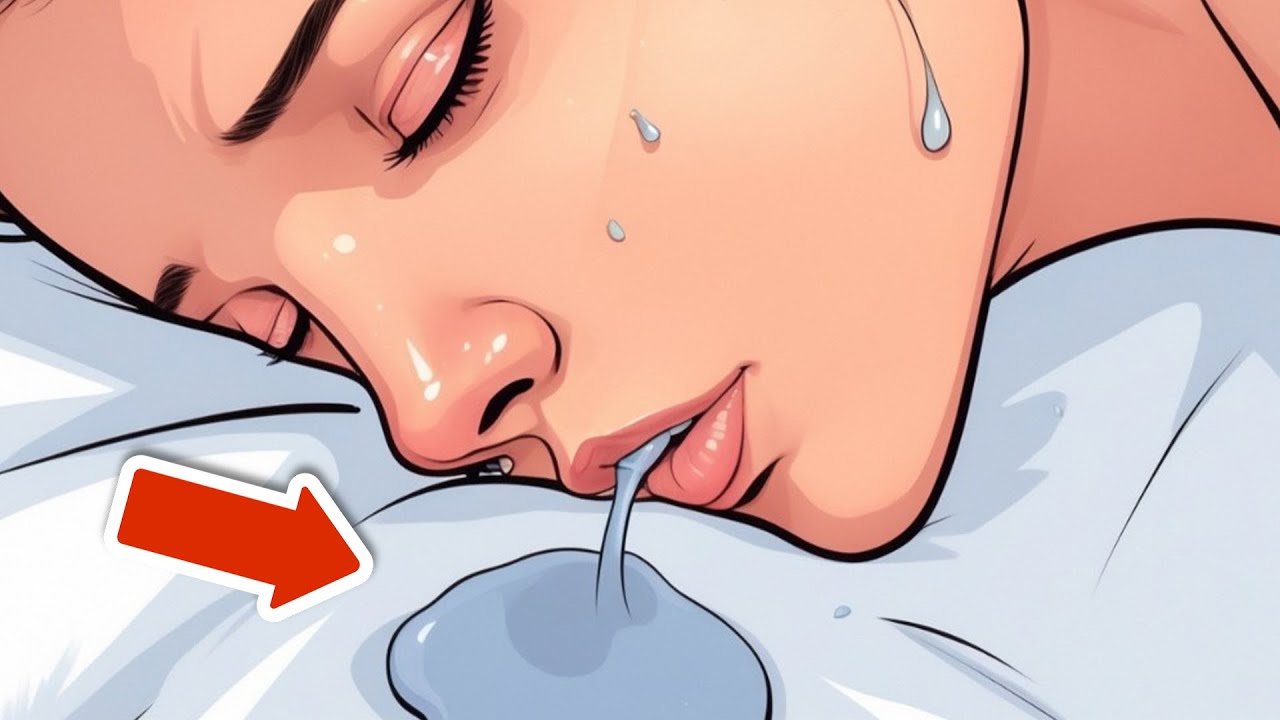
Many people joke about waking up with a wet pillow, but drooling in your sleep isn’t always harmless. While occasional drooling can happen to anyone—especially after a deep nap—it may sometimes be a sign of an underlying health issue.
Here are 8 possible conditions that can be linked to frequent nighttime drooling:
1. Sleep Apnea
Interrupted breathing during sleep may cause the mouth to open, leading to drooling. It’s also linked with loud snoring and daytime fatigue.
2. Gastroesophageal Reflux Disease (GERD)
Acid reflux can irritate the throat, increasing saliva production at night.
3. Sinus or Nasal Congestion
Blocked nasal passages (from allergies, sinusitis, or colds) force you to breathe through your mouth, which often leads to drooling.
4. Neurological Conditions
Disorders such as Parkinson’s disease, stroke, or multiple sclerosis can affect swallowing and saliva control.
5. Tonsillitis or Throat Infections
Enlarged tonsils or throat irritation may interfere with normal swallowing during sleep.
6. Medication Side Effects
Some drugs (such as antipsychotics or certain antidepressants) can increase saliva production as a side effect.
7. Difficulty Swallowing (Dysphagia)
Conditions that affect the swallowing reflex may cause saliva buildup, especially at night.
8. Poor Sleep Position
Sleeping on your stomach or side can make drooling more likely. While not a disease, chronic drooling in these positions may still mask an underlying issue.
What You Can Do
- Try changing your sleeping position.
- Keep nasal passages clear.
- Stay hydrated.
- If drooling is persistent, bothersome, or paired with other symptoms (snoring, choking, heartburn, weakness), it’s best to consult a doctor.
Conclusion
Drooling in your sleep isn’t always serious—but it shouldn’t be ignored if it happens often. By understanding the possible causes, you can take the right steps toward better sleep and overall health.



