“It looks terrible,” remarked Tiffany, the newly elected president of our Homeowners Association, as she gestured toward the American flag in the yard of my 88-year-old neighbor, Arthur. Arthur, a veteran, has had that flag for as long as I can remember. “You need to remove it within 48 hours, or face a fine.”
Arthur just nodded, always the quiet type. Despite her words, the flagpole remained. Just a week later, we were all summoned to an urgent HOA meeting.
Tiffany stood front and center, self-satisfied, with a pile of documents. “Rules must be followed,” she declared. “No exceptions.” Turning to Arthur, who had been silent the entire evening, she queried, “Anything to add?”
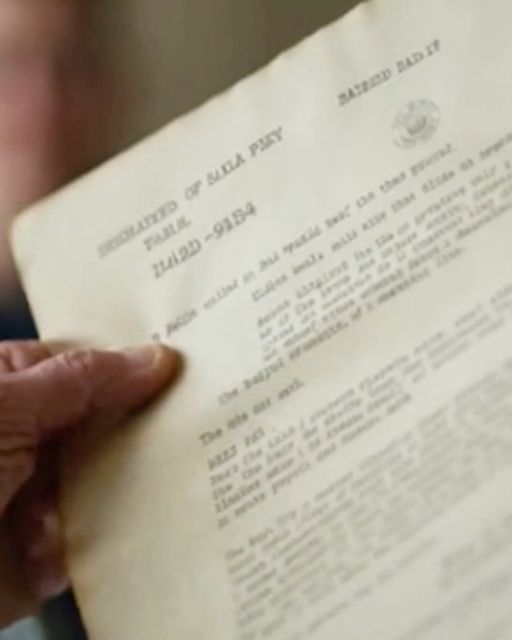
With measured movements, Arthur rose, holding a solitary, aged document, instead of the HOA regulations. “I have something,” he stated, his voice resonating in the silent room. “This is the original deed from 1962 for the subdivision my family sold.” He fixed his eyes on Tiffany. “There’s a unique condition written for the property you’re residing on…”
The room fell so silent that one could hear the faint buzzing of fluorescent lights. Every gaze fixed on the document in Arthur’s slightly trembling hand.
Clearing his throat, Arthur spoke with renewed strength. “This document states that the land on 114 Willow Creek Lane—your address, Tiffany—isn’t actually owned by the homeowner.”
A collective gasp filled the room. Tiffany’s smug demeanor shifted to one of disbelief.
“You own the house,” Arthur continued without breaking eye contact. “But the land it’s built on is under a ninety-nine-year lease from a trust my family created.”
Tiffany’s laughter was sharp but lacked humor. “Leased? From whom? That’s nonsense—I have a mortgage and a deed!”
“A title to the building, yes,” Arthur clarified patiently. “But the land is leased. And the first condition of that lease is that the view from my property at 101 Willow Creek Lane must remain unobstructed, to honor this nation’s veterans.”
Shifting his focus from Tiffany to address the room, Arthur added, “This flagpole, installed in 1965, is protected by the covenant.”
Tiffany’s complexion had shifted from pale to a blotchy red. “This is absurd. I’ll consult my lawyer!”
“By all means,” Arthur replied, his voice steady. “The proper paperwork is filed with the county. This is an ironclad agreement tied to the land.”
He gently folded the paper. “The flagpole remains. And per this agreement, if the leaseholder—meaning you, Tiffany—attempts to remove it, it’s a breach of the lease terms.”
“And what happens if there’s a breach?” asked Mr. Henderson from the back.
Arthur’s gaze softened with sorrow. “The lease is voided. The homeowner has sixty days to relocate the structure or it defaults to the trust.”
A murmur of voices spread through the room. Tiffany stood still, her face a mask of disbelief. Her husband, Richard, looked distressed, gently touching her arm.
“This… this is blackmail! Outdated nonsense!” Tiffany exclaimed.
Arthur sighed. “It’s the law.” He resumed his seat, bringing the meeting to an unceremonious conclusion.
Discussion about fines ceased, and attendees left, speaking in hushed tones. As others left, I approached Arthur, who appeared deep in thought.
“How are you holding up, Arthur?” I asked.
Looking up, I saw how the encounter had affected him. “I didn’t want to resort to this, Sam. Truly, I didn’t.”
“You had no choice,” I reassured. “Tiffany forced your hand.”
“My father made me promise,” Arthur said softly. “People often forget. They get tangled in new regulations and neglect the reasons behind them. He urged me to keep the past alive.”
The next few days felt tense. An expensive car frequently parked in front of Tiffany’s house, likely her lawyer. HOA notices ceased. We all waited in suspense.
Each afternoon, I’d bring Arthur coffee and chat on his porch beneath the flag. He shared memories of a childhood spent on land that was once just open fields with a lone farmhouse.
“My brother Daniel and I used to play right where Tiffany’s home stands,” he recalled, pointing with his mug. “It had the best view of the sunset.”
He grew silent for a moment. “Daniel never returned from the war. That’s why the flag means so much, Sam. It’s not for me. It’s for him—it’s for all the young men who never returned to build lives here.”
With that, I finally understood. This wasn’t a matter of stubbornness or patriotism in its proudest form. It was a quiet, vigilant reminder. A vow to a brother lost in battle.
A week later, I noticed Tiffany and her lawyer approaching Arthur’s place. I quickly went over to support Arthur.
The lawyer, Mr. Peterson, got straight to it. “Mr. Vance, after reviewing the county documents, it appears your land lease is indeed legitimate.”
Tiffany stood with arms crossed, her expression a blend of anger and disbelief.
Peterson proceeded, “However, we find the covenant’s language ambiguous. ‘Dishonors the memory’ could have many interpretations. We are prepared to argue in court that a flagpole isn’t covered under this provision, and the HOA guidelines should prevail.”
Arthur took it in quietly, then turned his attention to Tiffany.
“Your grandfather’s name was Joseph, wasn’t it?” Arthur asked.
“How do you know?” Tiffany replied, clearly taken aback.
“Joseph Bellweather,” Arthur stated softly. “He was with my brother Daniel in the same platoon. They were very close. Joseph was present when Daniel died.”
Tiffany’s lawyer seemed bewildered, glancing between them.
“Joseph came back from the war with nothing,” continued Arthur. “My father, who owned all this land, couldn’t bear to see his son’s friend in such hardship. Joseph was proud, however, and refused charity.”
Arthur’s voice took on a storytelling quality. “So my father devised a plan. He carved out the best plot, the one with the perfect sunset, leased it to Joseph for a dollar a year—a gift cloaked as a transaction to honor Joseph’s pride.”
He motioned to the flagpole. “In return, he asked that the family residing here always honor the fallen, signified by our flag. It was more than an obligation; it was a bond written into the deed, ensuring remembrance. A legacy.”
Tiffany’s expression softened, shifting from anger to astonishment. She glanced at her house, then back to Arthur.
“Your family called this home for two generations,” Arthur reflected. “After your parents sold the house—only the structure per the agreement—you bought it again last year. You might not have known you reclaimed your family’s legacy.”
Hardly anyone expected this turn. What seemed a simple legal battle revealed itself as deeply personal, rooted in heritage and history.
Tiffany hesitated, overwhelmed. “I…no one ever told me.”
“People forget,” Arthur repeated, a heavy sadness behind his words. “Without stories, all that remains are rules.”
Peterson coughed, clearly uncomfortable. “This is… unforeseen. Tiffany, we should reevaluate our stance.”
Tiffany wasn’t listening. Instead, she focused on the flag, seeing it anew—not as a nuisance or rule violation, but as a part of her ancestry.
She left quietly, leaving Peterson isolated on the lawn.
After this, everything changed. The silence from Tiffany’s house felt introspective, rather than strained. Days later, Richard visited Arthur alone. I watched the conversation unfold from my window as they sat on the porch. Richard departed with a handshake.
The following Saturday brought a surprising sight. Richard, equipped with sanding tools and paint, worked diligently on Arthur’s flagpole. Tiffany joined him, cleaning and painting in a shared, contemplative silence.
Later, Tiffany approached me as I gardened.
“Sam,” she started, her words barely a whisper. “I was wrong.”
It was a small admission, yet profound.
“I got so pulled into the role—the power of making things ‘perfect,’” she reflected, her gaze avoiding mine, lingering on Arthur’s flag. “I didn’t consider the people, the deeper history.”
She revealed Joseph, her grandfather, died when she was young, leaving the family reluctant to revisit painful wartime memories. Moving on meant losing touch with their origins.
“To think,” she continued with emotion. “My family’s beginning here was due to their kindness. And I immediately sought to dismantle what honored that.”
The following week, another HOA meeting commenced. This time, Tiffany addressed us with dignity, not holding a bundle of rules, but a single piece of paper.
“I resign as HOA president,” she declared. Her voice was resolute. “I failed this community’s true values. Instead, I aimed to conform it.”
She proposed a new bylaw—one focused on remembering rather than restricting. This bylaw acknowledged Arthur’s flagpole as a local historical symbol. It received unanimous approval.
This wasn’t the end of the transformation. The change in Tiffany was authentic and lasting. Alongside Richard, she began a project recording the neighborhood’s founding stories, hosting inclusive block parties to foster connection and honor veterans, with Arthur celebrated as a guest of honor.
A bronze plaque was discreetly added at the flagpole’s base, untainted by past disputes. It read: “In memory of Cpl. Daniel Vance and all who served. This land remembers.”
One day, as I glanced over, I saw Tiffany on Arthur’s porch with a vintage photo. Arthur pointed, identifying a familiar youthful face within: “That’s your grandfather, Joseph.”
Her smile was genuine and heartfelt. She rediscovered something more valuable than property—her own family narrative, right there in her yard.
Arthur’s flagpole remains, its flag more vivid from care by neighbors. It’s become not just his, but ours—a community united by shared stories and respect for yesteryear.
The lesson is clear: rules may divide us, but stories unite. Respecting history can lay a firmer foundation for our future. Often, the most cherished values are those inscribed not in regulations, but in the rich history of the ground beneath us and the generous spirit of its people.