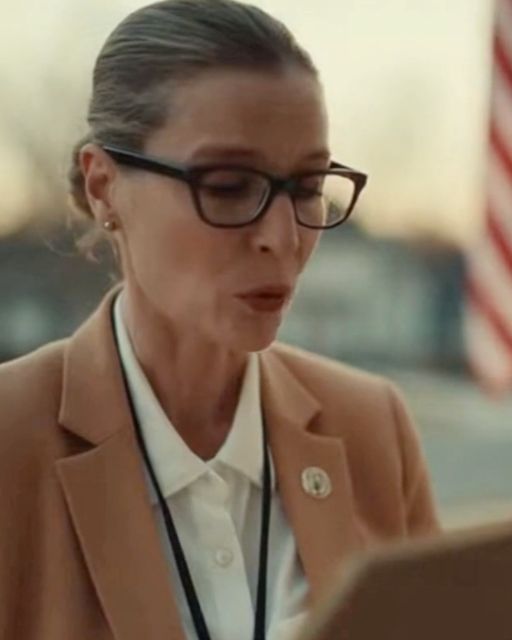
“You’re in violation of Bylaw 7.4,” Brenda stated firmly, clutching her clipboard. “That flagpole isn’t approved.”
Mr. Clifford, who’s seen this street transform from dirt to a dream home over the decades, settled comfortably in his porch rocker. His eyes, full of both age and clarity, observed her calmly. For half a century, he’d raised the American flag daily.
“Brenda, that flag flew here before this house had walls,” he remarked, voice slightly raspy yet unwavering.
“Rules are rules,” Brenda retorted, a satisfied smile on her lips. “You’ve got 48 hours. After that, expect fines. We could even place a lien on your home.”
Residents all around peeked through curtains. Brenda was making her rounds—this was her third confrontation in the month.
Sighing deeply, Mr. Clifford rose. He didn’t head towards the pole. Instead, he continued into his garage as we all anticipated he’d return with tools.
Instead, he re-emerged with a leather-bound book coated in dust.
Opening it to a specific page, he stated, “Bylaw 7.4 refers to satellite dishes, Brenda. However, you might want to read the founding charter. The first page, paragraph three. Could you read it aloud for everyone?”
Reluctantly, she took the book, her eyes scanning the lines.
Soon, her face lost all color. She appeared stunned.
“It states,” Mr. Clifford prompted, his voice suddenly stern, “all common areas, including the 10-foot frontage of every plot, aren’t part of the HOA’s jurisdiction. They are designated as a memorial trust, deeded to and managed by…”
Brenda whispered, visibly shaken, “… the original owner of Lot 1, or his designated heir.”
Firmly reclaiming the book from Brenda’s now unsteady grip, Mr. Clifford added, “And Lot 1 is mine.”
Shock immediately spread through the neighborhood. Gradually, door numbers could be heard unlocking, curtains pulling aside. Curiosity and support spilled onto lawns.
Brenda stammered, face flushed with a mix of disbelief and anger. “That’s… not possible. That can’t hold any legal value. The HOA was formed twenty years later!”
“It is a deed restriction,” Mr. Clifford elaborated, speaking with patient precision. “It binds the land, not the association. Robert Sterling, who developed this land, was my captain in the service.”
He paused, eyes drifting to the waving flag. “We lost countless men. When Robert returned and purchased this farmland, he envisioned a place for families to live peacefully. The kind of peace our fallen comrades never received.”

“This trust honors them,” he continued with conviction. “It’s meant to ensure that no committee or board can prevent someone from displaying their nation’s flag or planting a commemorative rose bush.”
Looking Brenda squarely in the eye, with unexpected intensity for his age, Clifford said, “As trustee, it’s my responsibility to uphold that right. So no, Brenda, not only will I not remove the pole—it’s my duty to keep it there.”
Brenda’s clipboard clattered noisily onto the pavement, her authority dissolving in the noontime sun.
Behind her, neighbors ventured out more openly. Tom, from a few houses down—recently penalized for a basketball hoop—offered a low whistle. Across the street, young mom Sarah, always on edge about her kids’ toys being seen from the street, was hand-over-mouth stunned.
Attempting to recover, Brenda shook a defiant finger at Clifford. “This is ridiculous! I’ll inform Mr. Harrington! The board will challenge this!”
Turning sharply, she huffed away, her departure more a scuttle than a strut.
Nonplussed, Mr. Clifford, bending as gracefully as age permitted, picked up her clipboard. He placed it methodically on his porch’s edge before settling back in his chair.
One by one, neighbors cautiously approached, finding new courage in his defiance. They gathered by the flagpole, amazement and gratitude etched into their expressions.
“Is it true, Mr. Clifford?” Tom inquired respectfully.
“As true as sunrise,” Clifford replied with a gentle smile. “Robert was meticulous with paperwork. It’s all documented at the county recorder’s office.”
Sarah came forward, holding her toddler close. “She told me to remove our little sandbox. Said it was ugly.”
“According to the trust,” he said, widening his smile, “your lawn is a showcase of life, not a display case. A sandbox is a lovely sight.”
Relief and quiet rejoicing rippled through those gathered. A proverbial cloud darkening their street for years was being lifted—all thanks to an old, dusty book.
Yet clouds of trouble still brewed.
Two days later, a certified letter reached Clifford’s home. Sent by the HOA’s high-profile law firm, it challenged the trust’s validity.
The board, led by President Allan Harrington, argued the HOA laws trumped it. They demanded Clifford cease declaring himself Trustee and remove the flagpole—with a 30-day compliance deadline before litigation to dissolve the trust altogether commenced.
The neighborhood buzzed, apprehension about this challenge widespread. Harrington, a retired executive, had the demeanor of a bulldog. He lorded over the HOA, his mansion looming at the cul-de-sac, rarely seen in public.
One evening, Tom and Sarah sought out Clifford. They found him amidst personal artifacts and medals in his study.
“We want to help,” Tom declared, holding a copy of the letter someone had circulated online. “It’s no longer just your fight.”

Sarah nodded. “My cousin’s a paralegal. Suggests starting with HOA meeting minutes to see if the trust was ever acknowledged.”
Recognizing their determination, Countless times, his resolve fortified theirs. “Legal fees won’t be cheap,” he warned.
“The money will be raised,” Tom vowed. “We’ll host bake sales, car washes—whatever’s needed.”
Thus began a transformation of the quiet suburb. “Save the Flag” initiatives sprang forth. Children ran lemonade stands on corners; previously distant neighbors shared plans over potlucks on lawns they now championed.
Investigating the HOA’s history revealed the trust was respected for three decades. Past boards worked with Clifford. But a decade prior, Harrington’s slate altered its course.
The board ceased trust discussions, gradually advancing restrictions, imposing fines ruthlessly. Brenda served Harrington’s control, his watchdog.
Their attempt to erase history was unraveling.
The special HOA meeting day approached. It convened in the community clubhouse, packed inside with standing room dwindling. Harrington, Brenda, and their lawyer oozed confidence from one side.
Conversely, Clifford had nearly the neighborhood rallying behind him.
Harrington embarked on a dismissive monologue about progress and property values. His speech cast Clifford as a relic of bygone times—a liability for them.
“The trust is a negligible nuisance,” the lawyer elaborated, “unenforceable, hindering proper management of this association.”
Clifford’s moment at the podium arrived. No notes accompanied him as he gripped the lectern, every knuckle white.
“I’m no lawyer,” he began softly, reaching all ears. “I’m just a man honoring a promise to a friend.”
He spoke of Robert Sterling, beyond a developer—a young captain writing to families of fallen servicemen. This neighborhood’s dream was safety and freedom.

“This flag,” voice laden with emotion, “is a monument to the price paid for the luxury of mailbox debates.”
Surveying the room, Clifford appealed, “This isn’t my flagpole. It’s ours.”
A reverent silence overtook the gathering. Yet Harrington returned a sneer.
“Heartwarming,” he retorted, “yet sentimentality lacks legality. The board’s discovered a clause in your beloved documents. If a trustee is unfit, mentally or physically, the HOA may assume control.”
With satisfaction, he readied to call for a vote while brandishing a note from a doctor who evaluated Clifford’s fitness.
The assembly erupted in protest. Cries of “Shame!” echoed through the hall, now abuzz with Brenda’s attempts to render Clifford’s aging as unfit for duty.
As Harrington escalated his tactics, the clubhouse’s rear doors swung open.
A young, composed woman, briefcase in hand, strode in purposefully.
“You won’t need that vote,” she stated with dynamic authority.
Harrington squinted scornfully. “And you are?”
“Eleanor Sterling,” came her introduction, grandaughter of Robert Sterling.
Dropped jaws permeated the silence.
Eleanor joined Clifford at the podium, reassuring his arm. From her case, a document surfaced—almost identical to Clifford’s but in pristine form.
“This is the genuine trust document,” she elucidated. “Verified by my family’s legal team: it’s indisputable.”

She turned to Harrington. “Grandfather anticipated those weighted with power might disrupt his vision.”
Displaying the last page, she continued, “A ‘poison pill’: omitted from your copies.”
Eleanor calmly outlined the provision—any attempt by the board to dismantle the trust would trigger a comprehensive financial audit by the Sterling firm, at the HOA’s expense.
White-faced, Harrington and Brenda stiffened.
“Any board acting maliciously would bear personal liabilities,” Eleanor declared icily. “Including our legal expenses—substantial, naturally.”
Their gambit unraveled conclusively.
The ensuing weeks saw scathing revelations—years of mismanaged funds, personal indulgences for Harrington and the board using HOA fees, frivolous lawsuits, and vanity projects.
Facing disgrace, Harrington and Brenda left their positions amid looming lawsuits. A new board formed, electing Tom as a reluctant but devoted president. Their swift action was passing a resolution honoring the Memorial Trust and publicly expressing thanks to Clifford.

Sunday saw a neighborhood barbecue on Clifford’s lawn. Children’s chatter and the aroma of grilling meat filled the air. Toys enjoyed newfound freedom in the sandbox Sarah once feared losing. Tom’s basketball hoop stood proudly.
Clifford watched from his porch, lemonade in hand, witnessing newfound friendships and unity once unimaginable.
The flagpole towered, the flag waving triumphantly. It was no longer his alone—it belonged to everyone.
Clifford understood then: it hadn’t been about the pole or the flag. It was a testament that rules exist to serve people. Communities grow not just from mandates but shared promises, history cherished, and kindness offered. It was a reminder that land preserved by a past generation envisioned free, united living for all.